Leadless Pacemaker Gives an 84-Year-Old Patient New Hope After 8 Years of Palpitations
Xi'an Chang'an Hospital reported a successful leadless pacemaker implantation for an elderly patient with atrial fibrillation, bradycardia, and long RR intervals.
Leadless Pacemaker Gives an 84-Year-Old Patient New Hope After 8 Years of Palpitations
Originally published by Xi'an Chang'an Hospital on May 23, 2026. Translated and republished by ChinaMedicalTour with partner-hospital permission.
Eighty-four-year-old Grandpa Sun held Director Dang's hand tightly in the First Department of Cardiovascular Medicine and said with emotion: "My heart finally no longer feels panicked. My chest is not tight anymore. My whole body feels lighter."
For eight years, he had been troubled by chest tightness and palpitations. Recently, he underwent leadless pacemaker implantation in the First Department of Cardiovascular Medicine at Chang'an Hospital, finally resolving a problem that had affected him for years.
A heart like failed brakes: an 8-year road of palpitations
Eight years ago, Grandpa Sun suddenly suffered an acute myocardial infarction and underwent emergency coronary stent implantation. From that point onward, coronary heart disease, hypertension, and cardiac insufficiency became part of his daily life.
What made things more difficult was persistent atrial fibrillation. His heartbeat was irregular, like a car whose brakes had failed.
One week before admission, his condition suddenly worsened. Chest tightness and palpitations became frequent, each episode lasting from several seconds to more than ten seconds. Even walking became difficult. Oral diuretics did not relieve the symptoms. His family did not dare delay and brought him to Chang'an Hospital.
Examination showed that his heart rate was only 52 beats per minute. The electrocardiogram indicated slow atrial fibrillation, and dynamic electrocardiography captured multiple long RR intervals. The longest pause approached five seconds.
"In this elderly patient's case, bradycardia and long pauses were causing insufficient cardiac output, which then triggered a series of abnormal physical symptoms," Director Dang of the First Department of Cardiovascular Medicine explained. "Long pauses can cause cardiac output to drop sharply. Mild cases may cause dizziness; severe cases may lead to syncope or even sudden death."
A tailored plan using advanced minimally invasive technology
After evaluation, Grandpa Sun met the indications for pacemaker implantation.
A traditional pacemaker requires a subcutaneous pocket and venous leads connected to the heart. For younger patients, this is a mature and reliable technology. But for an 84-year-old patient with multiple underlying diseases, the risks could not be ignored. Pocket infection, venous thrombosis, lead fracture, and lead dislodgement could all make his condition worse.
The department organized a multidisciplinary discussion. In the end, the team decided to use an advanced technology: leadless pacemaker implantation.
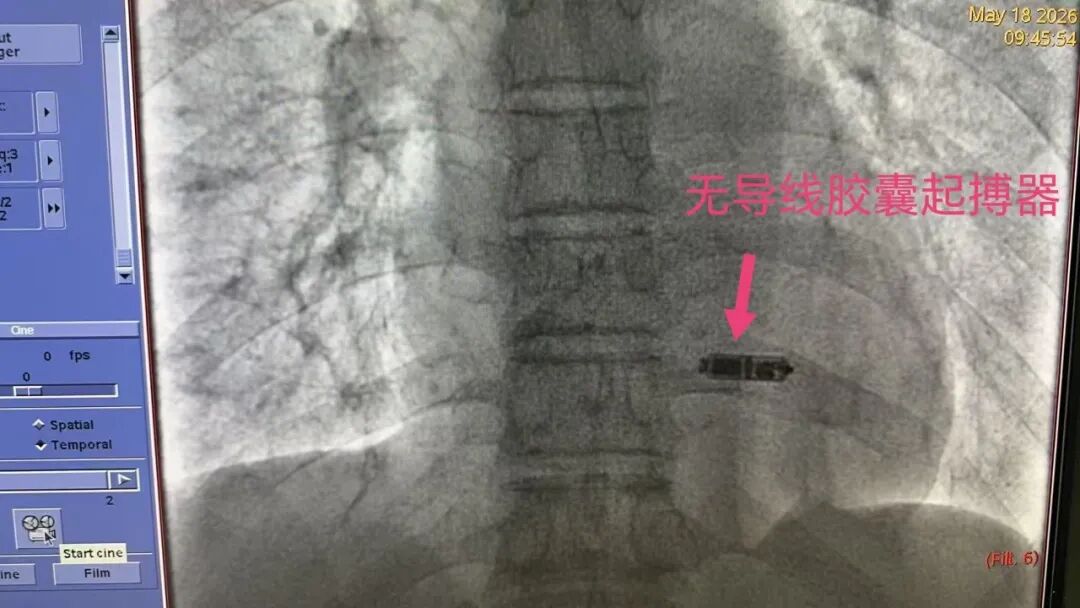
The device is about the size of a capsule and is implanted directly inside the heart chamber. It does not require a subcutaneous pocket and has no venous leads.
The approach causes less trauma, carries a lower infection risk, and supports faster recovery, making it especially suitable for elderly patients, patients with poor vascular conditions, and patients at high risk of infection. Compared with traditional pacemakers, it reduces surgical trauma and avoids lead-related complications, offering a new option for elderly high-risk patients.
Successful minimally invasive surgery and a stable rhythm
On the day of surgery, Director Dang and the cardiovascular medicine team relied on extensive experience and refined technique to complete the procedure with precise control throughout.
The operation was performed under local anesthesia. A catheter entered the heart through the femoral vein and delivered the pacemaker accurately to the right ventricular septum. The whole process took only a few dozen minutes.
Real-time testing during the procedure showed that pacing threshold and sensing function both met ideal standards. Grandpa Sun remained awake throughout and did not report obvious discomfort.
After surgery, his heart rate stabilized at about 60 beats per minute. Symptoms of chest tightness and dizziness were clearly relieved. By the second day, he was able to get out of bed and move around.
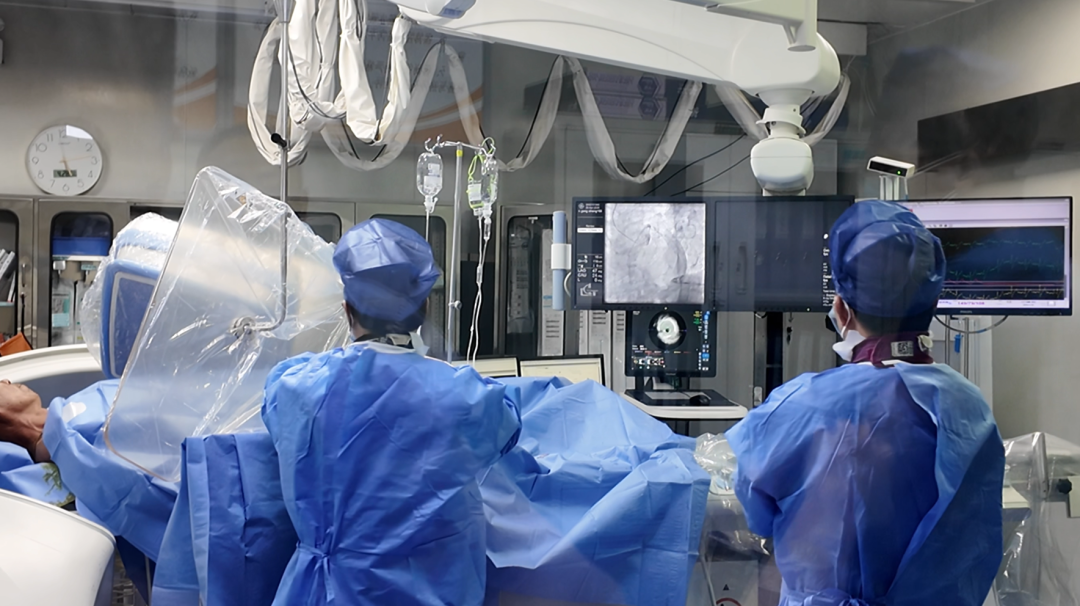
The launch of leadless pacemaker implantation marks a new stage for Chang'an Hospital in minimally invasive treatment for arrhythmia, advancing its arrhythmia diagnosis and treatment toward minimally invasive, precise, and efficient care.
The cardiovascular medicine team at Chang'an Hospital continues to follow the principle of individualized assessment and precise treatment. For complex and difficult cases involving advanced age and multiple systemic diseases, the team avoids a one-size-fits-all treatment model and creates treatment plans that are suitable and safe for each patient.
Expert reminder: patients with atrial fibrillation should not ignore palpitations
The cardiovascular medicine team at Chang'an Hospital reminds patients that atrial fibrillation with long RR intervals is not an untreatable condition.
If symptoms such as dizziness, transient blackouts, syncope, or worsening chest tightness occur, patients should seek medical evaluation promptly.
Source: First Department of Cardiovascular Medicine
Edited by: Tang Ting, Publicity Department
Reviewed by: Dang Yinhu, Department of Cardiovascular Medicine
Frequently Asked Questions
تحتاج إلى توصية مخصصة؟
شارك أهدافك وسنعد خطة سفر علاجي مخصصة.